Post-surgery physiotherapy does not follow one Delhi-wide timetable: the operation, healing restrictions, wound status, medical conditions and your pre-operative function determine each step. You will know what to bring, what the therapist checks, how exercise and walking are progressed, and what discharge means when you understand the process from assessment to independent activity.
Key takeaways
- Bring your operation notes, medication list and surgeon’s movement restrictions.
- Early exercises follow surgical precautions, pain levels and wound-healing progress.
- Progress includes safer movement, stronger function and better performance of daily tasks.
- Discharge includes a home plan, warning signs and criteria for ongoing support.
Before and During the First Rehabilitation Visit
The first appointment is an assessment and safety session, not a strenuous workout. The physiotherapist learns what operation you had, confirms the surgeon’s restrictions and checks whether movement can begin safely.
Bring:
- Operation notes and discharge summary
- Imaging reports and recent scans
- Your complete medication list, including anticoagulants
- Written instructions on weight-bearing, brace use and prohibited joint positions
- Wound information, dressing instructions and follow-up details
- The walking aid, brace or other assistive device you were told to use
- Details about stairs, bathroom access and help available at home
1. The physiotherapist reviews the operation, medical history, pain, sleep and daily limitations. They clarify instructions with the surgeon if the documents do not state whether you can bear weight, bend a joint or remove a brace.
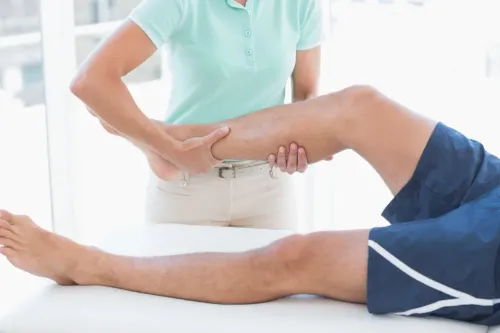
2. They inspect the wound area and swelling, then record pain, range of motion, muscle strength, sensation, balance, transfers and walking. These findings create a baseline for measuring change.
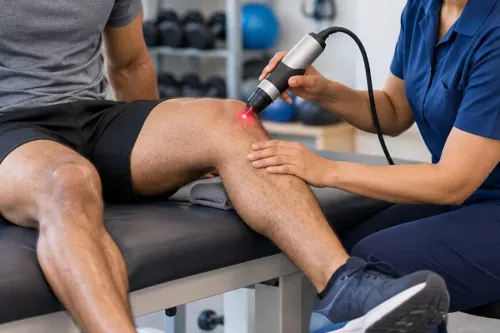
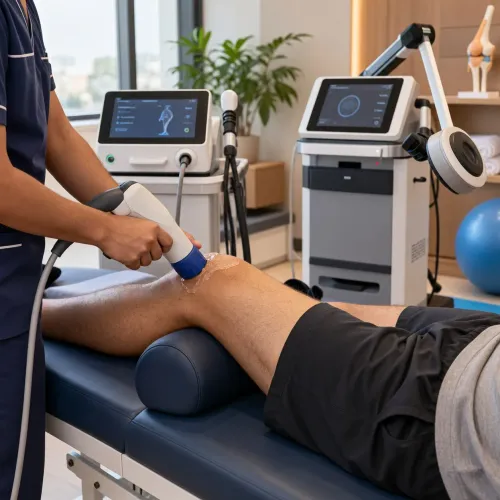
3. Treatment may include positioning, breathing exercises, circulation movements, bed mobility, transfers or short walking practice with the prescribed aid. The therapist does not change anticoagulant doses; clot-prevention measures follow the surgical team’s plan.
4. Before you leave, you receive a home programme with repetitions, frequency, permitted pain response, ice or elevation instructions when appropriate, and clear stop-and-call guidance. This home practice is a central part of the post surgery physiotherapy process.
What happens in post operative rehabilitation in Delhi depends on the operation, healing restrictions, wound status and your pre-surgery function—not on a city-wide timetable.
How Precautions Determine Early Exercise and Mobility
Weight-bearing is not granted because pain has eased. The team first checks the operation, tissue-healing stage and surgeon’s instructions, then matches activity to your wound, symptoms, strength and pre-operative function. A knee replacement, fracture repair, spinal procedure and abdominal operation therefore follow different starting points.
Readiness for movement is judged through:
- Wound appearance, drainage, redness, swelling and temperature
- Pain response at rest and during movement
- Joint range, muscle activation, sensation and balance
- Safe transfers from bed or chair, standing and walking with the prescribed aid
- The exact limit on weight-bearing, brace use, lifting or prohibited joint positions
A fresh incision, unusual calf swelling, chest pain, breathlessness, fever, sudden weakness or uncontrolled pain requires medical review rather than harder exercise. The physiotherapist contacts the surgical team when instructions conflict, symptoms change unexpectedly or the planned loading level is unclear.
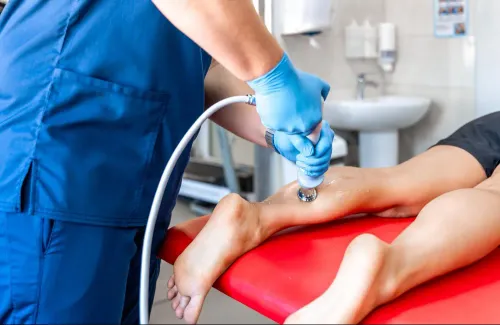
Early treatment may involve positioning, breathing exercises, ankle pumps, quadriceps or gluteal contractions, assisted movement and short walking practice. It is not a test of toughness. Forcing a swollen knee into painful flexion, stretching across a protected repair or massaging an incision can delay healing.
Your home programme then extends supervised care between appointments. Written or video instructions should state repetitions, frequency, acceptable pain response, use of ice or elevation, and the exact symptoms that mean stop and call the clinical team.
This structure matters in rehabilitation after surgery in Delhi, where frequent correct practice usually provides more movement exposure than occasional clinic visits.
From Assisted Movement to Functional Recovery
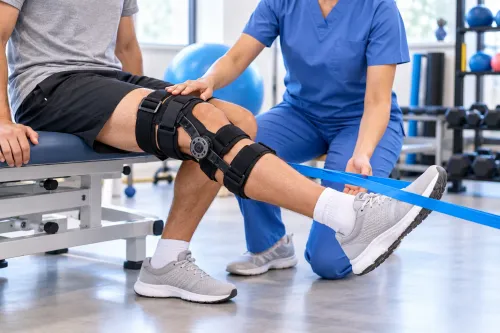
Later sessions shift from assisted movement to active control, strength, balance and daily function. The therapist reduces hands-on help, increases exercise resistance or repetitions, and practises tasks such as transfers, walking, stairs, reaching or lifting. Progress follows safe milestones, not a fixed session count.
| Operation | Later-session focus | What controls progression |
|---|---|---|
| Knee or hip replacement | Joint movement, gait, stair practice and leg strength | Wound status, surgeon’s precautions and controlled walking |
| Fracture fixation | Protected loading, joint movement and muscle recovery around the repair | X-ray findings and the written weight-bearing order |
| Spinal surgery | Walking endurance, posture, trunk and hip control | Surgical restrictions, neurological findings and symptom response |
| Abdominal surgery | Breathing, bed mobility, upright activity and walking | Wound healing, pain and lifting limits |
The operation changes the programme. A knee replacement may prioritise bending the knee and normalising gait, while fracture repair can require weeks of restricted loading. Spinal or abdominal surgery may place greater emphasis on precautions, endurance and safe transfers than on forceful strengthening.
Your walking aid stays in use until your gait is safe and controlled; dropping it because a calendar date has passed can increase falls and poor movement patterns. A written home programme should state repetitions, frequency, acceptable pain response, and when to stop. It should also explain ice or elevation when prescribed.
A provider for post operative rehabilitation Rohini should communicate with the surgeon when restrictions conflict, record follow-up findings, screen wounds and red flags, and arrange escalation when recovery becomes atypical.
How Progress Is Measured at Home and in the Clinic
Less pain, controlled swelling, a clean healing incision, improved movement, steadier transfers and walking with the prescribed aid show that rehabilitation is progressing safely. The post surgery physiotherapy process should advance function, not merely reduce the number of appointments.
At home, record pain before and after exercises, swelling, walking distance, repetitions completed and any change in wound appearance. Follow the written or video plan for frequency, allowed discomfort, ice or elevation, and stopping rules. Do not add aggressive stretching, massage over the incision or heavier resistance because pain has eased.
Do not start, stop or change anticoagulants without the prescribing medical team.
The clinic compares your findings with the baseline and checks whether each milestone is controlled:
| Finding | Progressing safely | Contact the medical team |
|---|---|---|
| Pain or swelling | Settles with prescribed rest, ice or elevation and does not worsen day to day | New severe pain, rapidly increasing swelling or pain that blocks the programme |
| Wound | Incision remains closed, dry and gradually less red | Opening, pus, spreading redness, foul odour, fever or persistent drainage |
| Movement and walking | Better range, transfers and gait without unsafe compensation | Sudden loss of movement, new weakness, repeated buckling or a fall |
| Breathing or circulation | Comfortable breathing and expected limb soreness | Chest pain, breathlessness, coughing blood, or one-sided calf swelling and tenderness |
Contact the surgeon or physiotherapist when progress stalls or restrictions are unclear. Seek emergency care for severe breathing difficulty, chest pain or collapse. These escalation rules apply whether you seek rehabilitation after surgery in Delhi or elsewhere.
Discharge, Self-Management and Choosing Ongoing Support
Discharge is appropriate when you can perform essential activities safely, follow the home programme correctly, and recognise precautions and warning signs. It does not mean the tissues are fully healed. Your therapist should document your function, explain remaining restrictions, and confirm whether you need surgeon review, later strengthening, or independent maintenance.
Before the final supervised session, confirm that you can:
- Complete prescribed exercises at the correct frequency, repetitions and pain limit.
- Walk, transfer, use stairs or manage other essential tasks safely.
- Use ice, elevation, a brace or walking aid as instructed.
- Stop and seek advice for increasing wound redness, drainage, fever, sudden calf swelling, new weakness, chest pain or unexplained breathlessness.
Your written or video plan should state what to do, how often, and when to stop. Chest pain, coughing blood or severe breathlessness requires emergency help.
What happens in post operative rehabilitation in Delhi depends on the operation, healing restrictions, wound status, medical conditions and pre-operative function, not on a city-wide timetable. For post operative rehabilitation Rohini, ask Back In Motion -Dr. Sajal Agarwal -Physiotherapist whether follow-up findings, surgeon communication and escalation arrangements are part of the plan.
| Option | What it means | When it applies |
|---|---|---|
| Self-management | Home exercises with precautions and warning signs | Goals met safely |
| Periodic review | Independent practice with scheduled reassessment | Progress needs checking |
| Continued supervision | Further guided treatment and progression | Weakness, risk or functional limits remain |
Related service
Post Operative Rehabilitation at Back in Motion with Dr. Sajal Agarwal Are you recovering from surgery and looking for expert rehabilitation to get back on your feet? Dr. View service → |
Frequently asked questions
What happens during the first post-operative rehabilitation visit?
The physiotherapist reviews your operation, medical history, pain, medications and surgeon’s restrictions. They assess swelling, wound status, movement, strength, balance and safe mobility before teaching suitable exercises and transfers.
How do surgical precautions affect early exercise and mobility?
Precautions set the limits for weight-bearing, joint movement, lifting, bending, driving and wound protection. Your physiotherapist uses those instructions to choose exercises, walking aids and progression levels that protect the operated area.
How does rehabilitation progress from assisted movement to functional recovery?
Treatment can progress from positioning, breathing exercises and assisted movement to active strengthening, balance work, walking practice and task-specific training. Progress depends on healing, symptoms, control and your ability to manage daily activities safely.
How is progress measured at home and in the clinic?
The clinic tracks pain, swelling, range of motion, strength, walking or transfer ability and functional goals. At home, record exercise tolerance, walking distance, daily-task performance and warning signs such as increasing redness or drainage.
What happens at discharge from post-operative rehabilitation?
Discharge follows safe movement, improved function and the ability to continue the plan independently or with another level of support. You receive home exercises, activity guidance, precautions, follow-up instructions and signs that require medical review.
Keywords