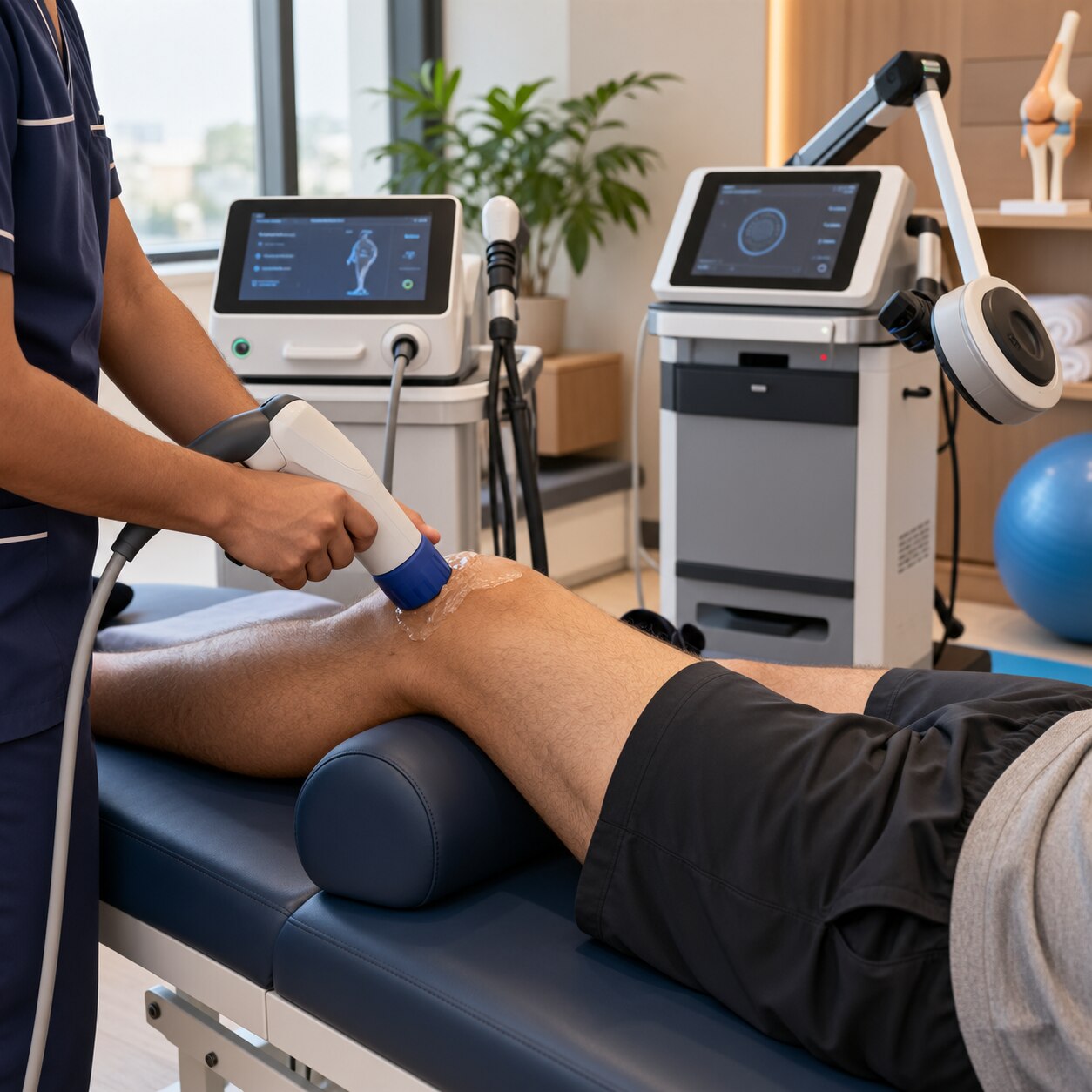
EMTT and shockwave therapy do not use the same physical treatment: one delivers pulsed electromagnetic fields, while the other delivers acoustic pressure waves. By comparing the target, sensation, evidence, session plan and risks, you can identify which option fits your diagnosis instead of choosing by a machine’s marketing claims.
Key takeaways
- EMTT uses pulsed electromagnetic fields; shockwave therapy uses acoustic pressure waves.
- Choose treatment based on your diagnosis, tissue depth and treatment goals.
- Ask about sensation, expected sessions, contraindications and follow-up before starting.
- Confirm the clinician will monitor progress instead of relying on the newest machine.
EMTT and shockwave therapy use different physical forces
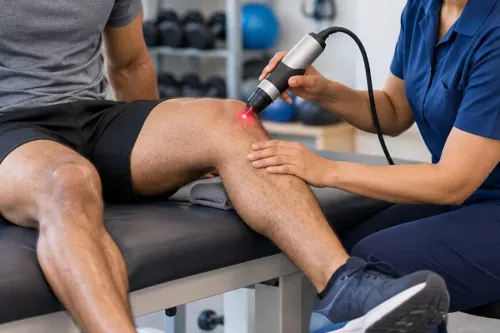
EMTT and shockwave therapy create different physical stimuli, so “EMTT or shockwave therapy which is better” has no universal answer. EMTT uses short, high-intensity pulsed electromagnetic fields that induce electrical effects in tissue without touching the skin. Shockwave therapy uses acoustic pressure waves that mechanically load tissue.
| Option | Physical force | Targeting | Treatment implication |
|---|---|---|---|
| EMTT | Pulsed electromagnetic field | Non-contact; tissue response depends on the field and applicator | Usually felt little or not at all, but the treatment dose is not described by acoustic energy |
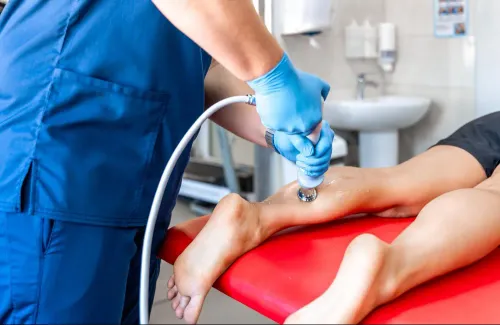
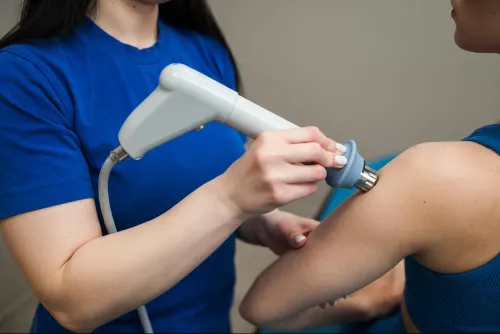
| Focused ESWT | Concentrated acoustic pressure wave | Energy is directed toward a selected depth | Useful when precise mechanical stimulation at a defined target is appropriate |
| Radial pressure wave | Pressure wave spreading outward from the applicator | Highest pressure occurs near the skin | Not interchangeable with focused shockwave; depth and dose differ |
This distinction affects both comfort and clinical choice. Focused and radial treatments are grouped under extracorporeal shockwave therapy, but studies report different pressure or energy-flux density, pulse counts, frequencies and treatment depths. A device label or advertised energy number alone cannot show which treatment matches your condition.
For tendon pain and plantar heel pain, shockwave therapy has a much larger research and guideline base than EMTT. That does not establish shockwave as the better treatment for every diagnosis; it makes the evidence gap important in any EMTT versus shockwave therapy discussion.
Ask which wave type is being used, what tissue is being targeted, and why that physical force suits your diagnosis.
Compare sensation, depth, precision and recovery before choosing
Comfort and precision point in different directions. EMTT usually feels like little or nothing because the applicator does not strike the skin. Shockwave treatment can feel sharp or heavy at the target, but the clinician can adjust intensity to keep the discomfort tolerable.
A useful shockwave therapy comparison must separate focused shockwave from radial pressure-wave treatment.
| Option | Sensation during treatment | Depth and precision | Recovery afterward |
|---|---|---|---|
| EMTT | Usually minimal sensation; no mechanical tapping | Broad electromagnetic field; exact tissue dose depends on the device and settings | Usually no downtime; temporary warmth or mild local sensitivity can occur |
| Focused shockwave | Pulses can be uncomfortable over an inflamed tendon or bone | Energy converges at a selected depth, giving the clinician a defined target | Tenderness, redness or bruising can last from several hours to a few days |
| Radial pressure wave | Repetitive tapping or pressure near the skin | Spreads outward; pressure is highest near the applicator, so it is less depth-specific | Local soreness is common and usually settles within a few days |
Do not treat “painless” as proof that EMTT works better. Choose the treatment whose field or wave reaches the intended structure without creating an unacceptable recovery burden. Ask which device is being used, where its energy peaks, and how many pulses or passes make up a session.
A machine’s advertised energy level alone cannot compare treatment doses.
Match the treatment to the diagnosis, not to the newest machine
The diagnosis should decide the device, not a clinic’s newest machine. In the phrase emtt or eswt, the stronger evidence for many tendon and heel conditions currently sits with ESWT, while EMTT remains a more limited option without convincing head-to-head proof of greater pain relief.
| Diagnosis | Better-supported fit | Why |
|---|---|---|
| Tendon pain | ESWT, especially focused treatment for a defined tendon | It has the larger trial and guideline base for persistent tendinopathy. It works best alongside load modification and progressive strengthening. |
| Plantar fasciitis | ESWT | Shockwave therapy has substantially more evidence for chronic plantar heel pain. Footwear, calf flexibility and plantar-fascia loading still affect recovery. |
| Joint pain | Depends on the pain source | Focused ESWT can suit a local tendon attachment or superficial joint-related target. EMTT may be considered for a deeper target, but research does not establish it as superior. |
| Bone-related problems | Specialist assessment first | Focused ESWT has recognised uses in selected delayed-healing or non-union cases. EMTT may be discussed for bone-related pain, but its evidence remains comparatively small. |
| Diffuse muscle pain | Neither as the first choice | Widespread pain needs assessment of strength, sleep, workload, nerve symptoms and medical factors. A passive pain relief treatment option will not correct the driver. |
Choose EMTT when a clinician has a specific deep target and its low-sensation, non-contact delivery solves a practical problem. Do not choose it merely because treatment feels painless.
What happens at the first appointment and what should you ask?
At the first appointment, the clinician should establish a named diagnosis before choosing EMTT, focused shockwave or radial pressure-wave treatment. They will review how long you have had symptoms, examine the painful structure, test movement and strength, and check whether imaging or another medical assessment is needed.
The target’s depth matters: focused shockwave concentrates energy at a selected depth, while radial pressure waves spread from the applicator and peak nearer the skin.
Ask these questions before agreeing to a plan:
- Is my diagnosis clear, and what finding supports it?
- Why does this treatment fit my condition better than exercise-based rehabilitation, medication, injection or observation?
- For an EMTT or ESWT decision, which exact protocol will you use?
- Is the device delivering focused shockwave or radial pressure waves?
- What are the energy-flux density or pressure, frequency, pulse count, applicator position and treatment depth?
- How many sessions will I need, and when should improvement begin?
- What safety checks apply to me, including implanted electronic devices, pregnancy, bleeding risk or medicines that affect clotting?
- What will we change if my pain does not improve?
Do not compare machines by claims such as “stronger” or “painless.” Those labels do not define the treatment dose. An EMTT versus shockwave therapy decision is meaningful only when the diagnosis, protocol and evidence for that condition are stated.
Back In Motion -Dr. Sajal Agarwal -Physiotherapist can use this assessment framework to explain why one option fits your findings.
Related services
EMTT – Extracorporeal Magnetotransduction Therapy EMTT – Extracorporeal Magnetotransduction Therapy Revolutionary Technology for Pain and Injury Recovery Extracorporeal Magnetotransduction Therapy (EMTT) is an advanced, non-invasive treatment that... View service → |
Extracorporeal Shockwave Therapy ( ESWT) Extracorporeal Shockwave Therapy ( ESWT) Extracorporeal Shockwave Therapy (ESWT) at Back in Motion with Dr. View service → |
Use evidence, safety checks and follow-up to make the final decision
Ask for evidence tied to your diagnosis, not a machine’s energy rating. For plantar heel pain and several tendinopathies, extracorporeal shockwave therapy (ESWT) has a substantially larger evidence base than EMTT, including randomized trials and systematic reviews. EMTT research remains smaller, with limited head-to-head evidence showing greater benefit than ESWT.
A sound shockwave therapy comparison also checks the diagnosis, symptom duration, treatment area, and whether the proposed ESWT is focused or radial. Evidence is less consistent for osteoarthritis, nonspecific back pain, acute injuries, and widespread pain. Do not transfer results from one body site to another.
Safety screening comes before either treatment. Tell the clinician about pregnancy, cancer in the treatment area, infection, a pacemaker or other implanted electronic device, blood-clotting disorders, anticoagulants, reduced sensation, and recent surgery. The clinician must decide whether your condition or medication makes treatment unsuitable.
A common ESWT plan uses about three to five sessions spaced roughly one week apart, but the device, energy, diagnosis, and target determine the schedule. Improvement often takes several weeks, so immediate pain relief is not a fair test.
Ask these questions before choosing:
- What is my named diagnosis, and what evidence supports EMTT or ESWT for it?
- Which device, wave type, treatment parameters, and number of sessions will you use?
- What pain relief treatment options include exercise-based rehabilitation?
- When should improvement appear, and what changes if pain does not improve?
That evidence-based process answers “emtt or shockwave therapy which is better” more reliably than novelty or comfort claims.
Frequently asked questions
What is the difference between EMTT and shockwave therapy?
EMTT uses short, high-intensity pulsed electromagnetic fields that induce electrical effects in tissue without skin contact. Shockwave therapy uses acoustic pressure waves that mechanically load tissue.
How should you compare EMTT and shockwave therapy?
Compare the expected sensation, treatment depth, targeting precision, recovery demands and the evidence for your specific diagnosis.
How do you choose between EMTT and shockwave therapy?
Match the treatment to the diagnosis, the affected tissue and your treatment goals rather than choosing the newest machine.
What should you ask at the first appointment?
Ask what diagnosis the treatment is targeting, why the clinician recommends it, how many sessions are expected, what you will feel and which safety checks apply.
How can you judge whether treatment is working?
Agree on measurable goals, track pain and function between sessions, and schedule follow-up to review progress and change the plan when needed.
Related service
Focused Shockwave Therapy (FSWT) Focused Shockwave Therapy (FSWT) Focused Shockwave Therapy (FSWT) in Physiotherapy Advanced Healing for Musculoskeletal Pain and Dysfunction Focused Shockwave Therapy (FSWT) is a... View service → |
Keywords