Rest is useful after some muscle injuries, but complete inactivity is rarely the best recovery plan. By checking how the pain started, what movements are limited and whether warning signs are present, you can decide when to reduce activity, when to begin movement and when physiotherapy is the safer next step.
Key takeaways
- Use relative rest for 24 to 48 hours after a mild muscle flare.
- Keep comfortable walking; avoid complete bed rest and painful activity.
- Resume normal movement gradually when pain and mobility improve.
- Seek physiotherapy when pain persists, worsens, or limits daily activities.
When does rest work better than muscle pain treatment?
Short-term relative rest works better for a new, mild muscle strain, cramp, delayed-onset soreness or overuse flare that is already easing. Stop the activity that triggers pain for 24 to 48 hours, but keep comfortable walking and gentle daily movement; complete bed rest can cause stiffness and reduce strength.
Seek assessment and active treatment instead of simply waiting if:
- Pain is severe, worsening, or present at rest
- Swelling, bruising, a sudden “pop”, marked weakness or restricted movement followed an injury
- Numbness, tingling, altered sensation or pain spreading into an arm or leg appears
- You cannot walk normally, lift the affected limb or use it for ordinary tasks
- Symptoms keep returning, or show no clear improvement after 48 to 72 hours of activity modification
The practical answer to muscle pain treatment or rest which works better rohini is to match the response to the cause and function. A physiotherapist or doctor should assess pain that does not settle, because “muscle pain” can reflect a tendon or joint problem, nerve irritation, infection, medication effect or another condition.
Treatment should then progress from comfortable mobility to strengthening, not rely only on machines or massage.
Get urgent medical care for severe muscle pain with unusual weakness, dark or cola-coloured urine, or greatly reduced urination after strenuous exercise. These signs can indicate rhabdomyolysis rather than ordinary soreness.
What should you do during the first 24 to 72 hours?
For the first 24 to 72 hours, use relative rest rather than complete bed rest: stop the movement that caused pain, but keep comfortable daily movement. Walking gently and changing position helps prevent stiffness without repeatedly loading the injured muscle.
Use this early plan:
- For a strain with tenderness, swelling or bruising, apply a wrapped ice pack for up to 20 minutes every 2 to 3 hours. Never place ice directly on your skin; it reduces pain but does not repair tissue.
- For delayed-onset muscle soreness, choose easy walking and pain-free range-of-motion exercises instead of repeating the hard workout. Ice is optional if it eases discomfort.
- For a cramp, stop the activity, gently stretch the muscle and use warmth if it feels tight. Do not forcefully stretch a painful or recently injured area.
- For an overuse flare, remove the aggravating task for 48 to 72 hours, then reassess. Heat can help stiffness after swelling has settled, but avoid heat over fresh swelling or bruising.
Keep activity below the level that increases pain during the session or leaves you worse later that day. Seek medical assessment sooner if you cannot bear weight, have marked weakness, a visible deformity, spreading redness, fever, numbness or rapidly increasing swelling.
If you are looking for muscle pain treatment in Rohini, choose assessment before treatment when the cause is uncertain.
How do you return from rest to normal movement?
After 24 to 72 hours of relative rest, start moving the painful area gently rather than staying in bed. The choice is not simply rest or physiotherapy for muscle pain: prolonged immobility causes stiffness, while graded activity restores function.
1. Begin with easy range-of-motion movements, such as slow bending, straightening or joint rotations. Keep discomfort mild, stop before sharp pain, and repeat several times through the day.
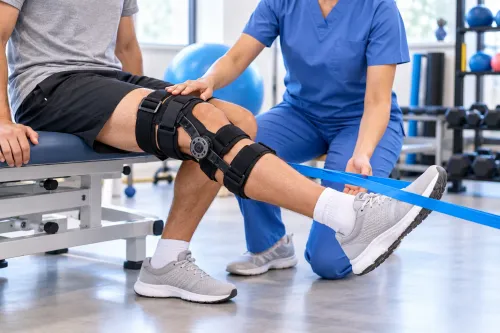
2. Add light loading when ordinary movement feels easier and symptoms do not worsen later that day or the next morning. Try short walks, unloaded squats, a gentle resistance band or light lifting.
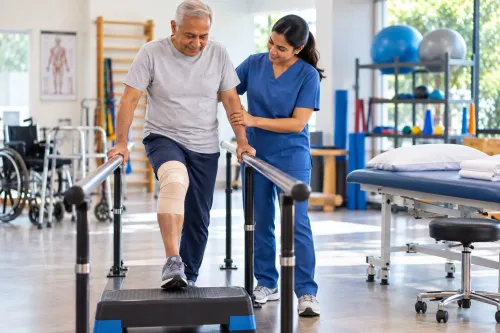
3. Progress to strengthening two or three times weekly. Increase repetitions before resistance, then add weight in small steps while keeping movement controlled and symmetrical.
4. Rehearse the exact demand of your job, exercise or sport. Practise lifting, climbing stairs, running drills or throwing only after you can complete daily movements and strength exercises without a flare-up.
Return when you have near-normal range of motion, useful strength, and no limp or protective movement. A temporary pain reduction from heat or massage does not prove readiness; function matters more than the pain score alone.
If progress stops, weakness remains, or pain repeatedly returns, a physiotherapist can adjust the load and check whether another injury is present.
What happens during physiotherapy for muscle pain?
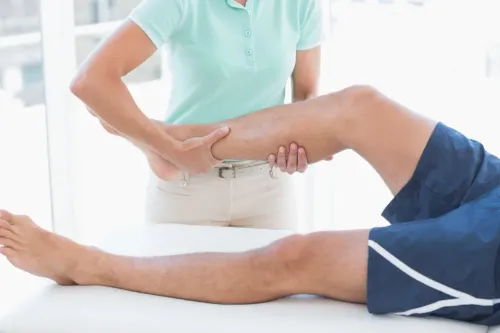
An effective physiotherapy assessment identifies the pain’s cause before selecting treatment. The physiotherapist asks how it started, checks swelling or bruising, tests movement and strength, examines sensation, and observes which activities reproduce symptoms. This helps distinguish a muscle strain from tendon, joint, nerve, infection, or medication-related problems.
A useful plan should include:
- A clear working diagnosis and goals linked to walking, lifting, work, exercise, or sport.
- Temporary activity modification instead of complete bed rest, followed by gentle mobility and graded loading.
- An individual exercise programme that progresses from pain-tolerated movement to strengthening and task-specific practice.
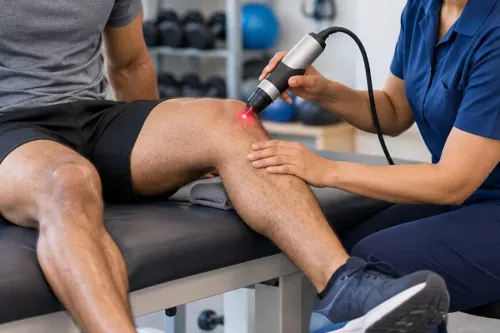
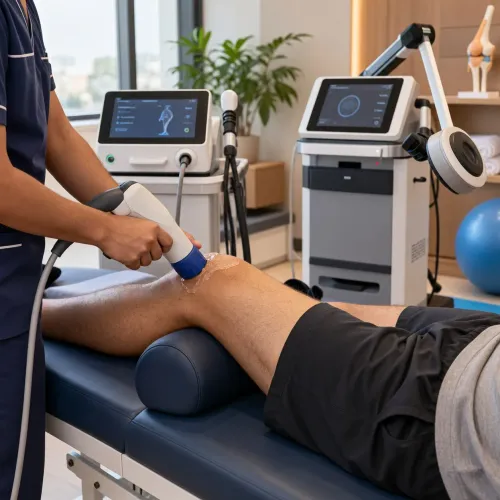
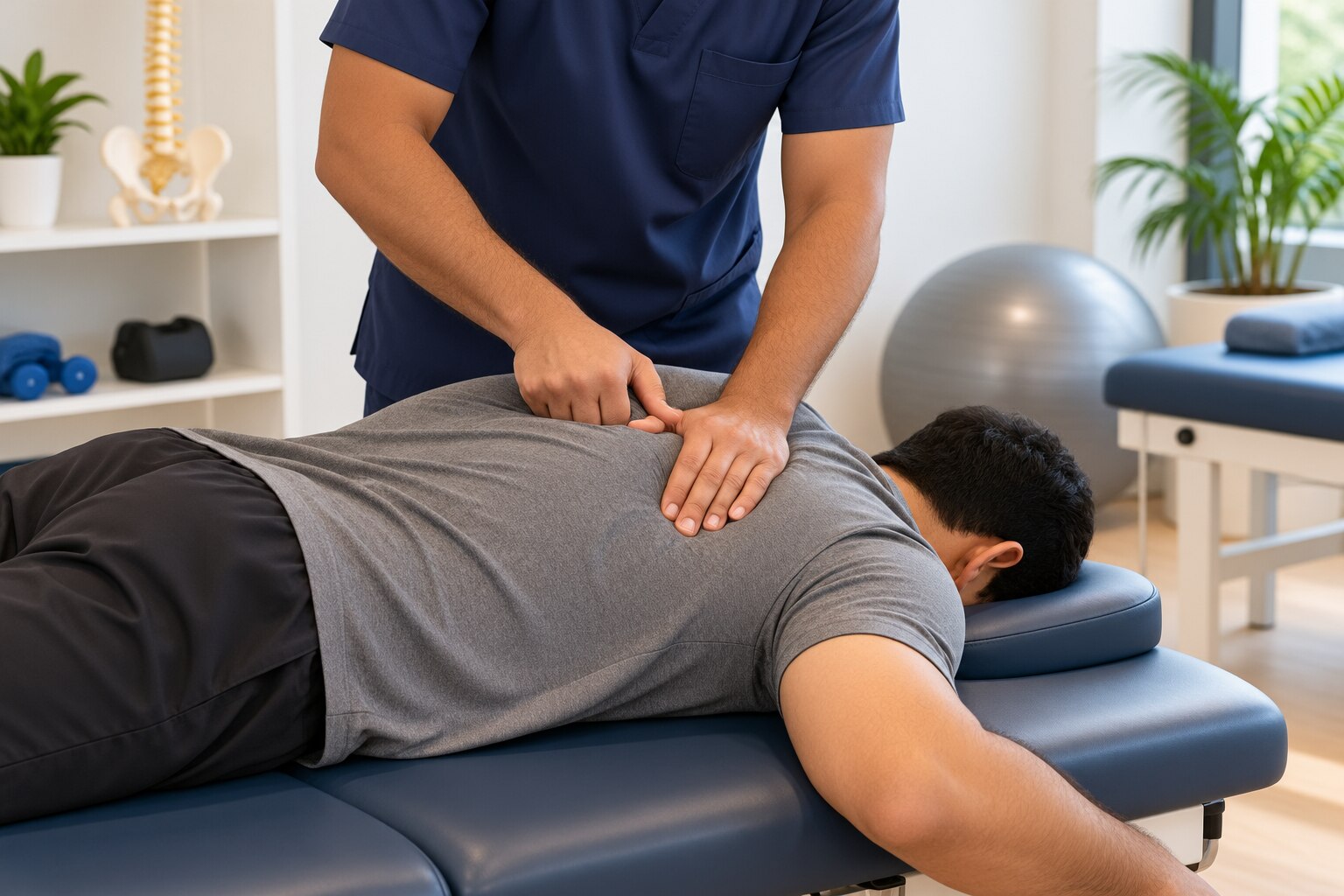
- Manual therapy, massage, heat, or electrotherapy only as supportive measures alongside exercise, not as the whole treatment.
- A review point based on function: movement, strength, tolerance, and daily activity, not pain relief alone.
Physiotherapy for muscle pain is useful when ordinary activity remains limited, symptoms keep returning, or you are unsure whether the problem is muscular. Temporary relief after massage or heat does not prove recovery if weakness or restricted movement remains.
A muscle pain relief clinic in Rohini is a practical choice when you need an examination, supervised progression, or help adapting treatment to work and exercise demands.
Back In Motion -Dr. Sajal Agarwal -Physiotherapist can be considered when the assessment explains what is being treated and gives you exercises and clear review criteria, rather than offering the same passive protocol for every painful area.
Related services
Muscle Pain Treatment Muscle Pain Treatment in Rohini, Pitampura- Dr. Sajal Agarwal Clinic Dr. View service → |
Tennis Elbow Pain Treatment Get Tennis Elbow Pain Treatment in Rohini - Dr. Sajal Agarwal Clinic Tennis elbow, also known as lateral epicondylitis, is a condition that causes... View service → |
How do you know whether the plan is working?
Pain and function should improve together. You are recovering when walking, lifting, sleeping, or exercising becomes easier, your movement expands, and the same activity causes less pain the next day. Temporary relief after heat, massage, or electrotherapy is not recovery if weakness or restricted movement remains.
| What you notice | When to reassess | What to do |
|---|---|---|
| Clear improvement in pain and movement | Continue gradual loading | Increase activity in small steps |
| No meaningful improvement | After 5–7 days for a minor strain; sooner if severe | Arrange a clinical assessment |
| Pain returns each time you resume activity | After two or three flare-ups | Review the diagnosis, workload, technique, and strength plan |
| Worsening pain, swelling, bruising, weakness, or reduced range | Same day or promptly | Stop aggravating activity and seek medical advice |
For someone searching “muscle pain treatment rohini”, the assessment should check whether the problem is muscular at all. Tendon, joint, nerve, infection, medication effects, and other conditions need different care. Do not keep repeating complete rest for recurring pain; reassess the cause and plan active rehabilitation.
Seek urgent medical care for dark or cola-coloured urine, greatly reduced urination, severe muscle pain, or unusual weakness after strenuous exercise. Also seek urgent help for sudden loss of strength or sensation, inability to use a limb, chest pain, breathing difficulty, or fever with a hot, rapidly swollen area.
Frequently asked questions
When does rest work better than muscle pain treatment?
Short-term relative rest suits a new, mild strain, cramp, delayed-onset soreness, or overuse flare that is already easing. Stop the triggering activity for 24 to 48 hours while keeping comfortable walking and gentle daily movement.
What should you do during the first 24 to 72 hours?
Stop activities that increase pain, avoid complete bed rest, and continue comfortable daily movement. Use pain as your guide and seek medical assessment for severe pain, major swelling, bruising, weakness, numbness, or inability to bear weight.
How do you return from rest to normal movement?
Restart easy movement first, then increase duration, range, resistance, and activity demands one step at a time. Reduce the load if pain becomes sharper, spreads, or remains worse after activity.
What happens during physiotherapy for muscle pain?
A physiotherapist assesses your pain, movement, strength, and the activity that triggered symptoms. Treatment can include targeted exercises, hands-on techniques, education, and a gradual return-to-activity plan.
How do you know whether the plan is working?
You should notice easier movement, improved daily function, better strength, or lower pain over time. Reassess the plan if symptoms stop improving, worsen, or continue limiting normal activities.
Keywords