You should leave a first knee appointment knowing what the clinician suspects, which movements are safe, and what happens next—not simply having been offered a scan or a passive treatment. By the end of the visit, you can expect a structured history, movement assessment, practical home advice and a clear plan for review or medical referral.
Key takeaways
- Bring scans, medical records, medicines, referral notes, and a symptom timeline.
- Expect movement, strength, swelling, walking, and targeted knee tests.
- Seek urgent care for severe deformity, fever, sudden swelling, or inability to bear weight.
- Leave with a working diagnosis, treatment plan, exercises, and follow-up criteria.
What to Bring and What Happens Before the Examination
For your knee pain treatment in Rohini first visit, bring previous X-ray or scan reports, surgery or hospital records, your medication list, and any referral notes. Add a short timeline: when the pain began, whether an injury caused it, and what changed afterward.
1. Complete registration and describe the main problem in your own words. Identify the exact pain location, whether it spreads, and whether it feels sharp, aching, burning or stiff.
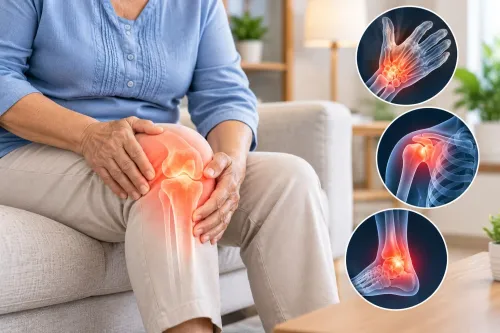
2. Explain the pattern. The clinician will ask about swelling, clicking, locking, giving-way, morning stiffness, night pain and how long you can walk before symptoms increase.
3. List movements that worsen or ease the pain, such as stairs, sitting, standing, squatting, running or getting up from a chair. Mention what you have already tried, including rest, medicines, injections, exercises or braces.
4. Share relevant health information, including previous knee problems, arthritis, back or hip symptoms, diabetes, inflammatory conditions and current medicines. Tell the clinician about your work, sport, daily demands and treatment goals.
5. Expect a discussion of your walking tolerance and priorities before the physical examination begins. The clinician should use this history to form a working diagnosis and decide what to assess, rather than treating a scan result alone.
Wear loose clothing that allows the knee and nearby hip and ankle to be seen. Arrive prepared to describe your usual activities; vague answers can hide the movement that keeps aggravating the problem.
The Physical Tests Used to Find the Source of Knee Pain
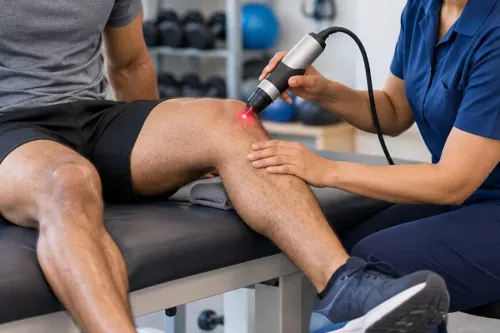
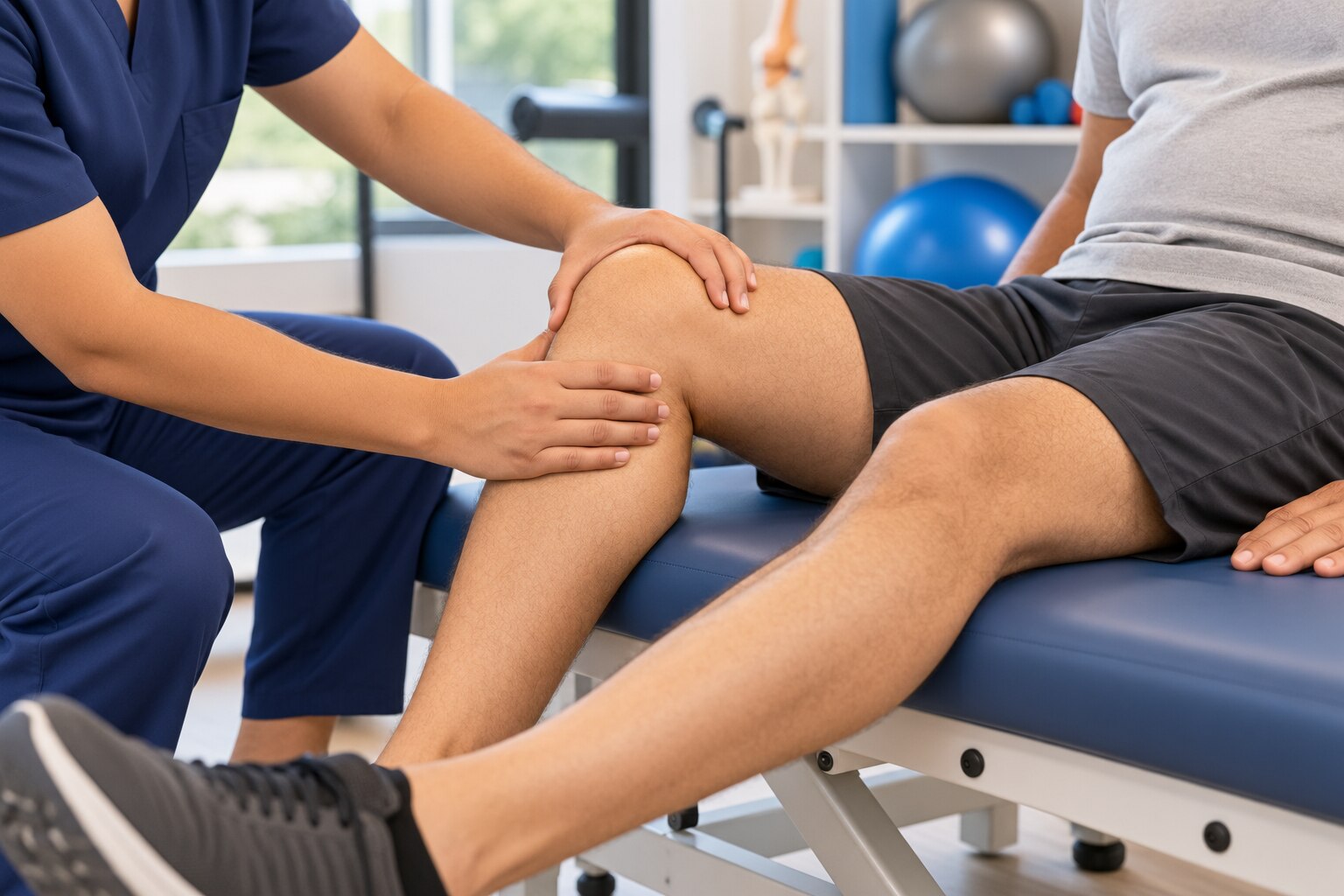
The physiotherapist will examine how your knee looks, moves and responds to load, then compare it with the other side. The assessment checks whether the pain comes from the knee itself or from a contributing problem in the hip, ankle, muscles or lower back.
- Look for swelling, bruising, redness, muscle wasting, altered alignment and difficulty fully straightening the knee.
- Feel around the kneecap, joint line, tendons and ligaments to locate tenderness and identify painful structures.
- Measure knee bending and straightening. Restricted movement can point to joint irritation, stiffness or an internal injury.
- Test quadriceps and hamstring strength against resistance, noting pain, weakness and differences between legs.
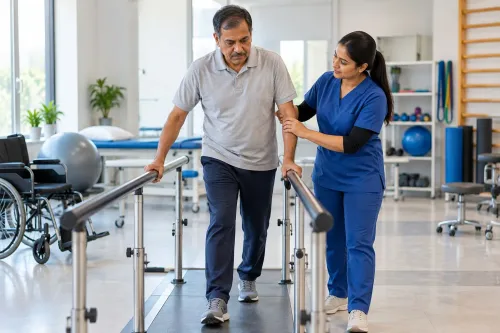
- Watch you walk, turn, stand on one leg and balance. A limp or poor control can increase knee loading.
- Assess hip and ankle movement, because reduced mobility in either joint can change how your knee moves.
- Observe practical tasks such as sitting down, rising from a chair, using stairs, squatting or stepping down.
These tests help distinguish patterns such as patellofemoral pain, tendon irritation, ligament injury, joint stiffness and referred pain from the hip or spine. A responsible knee physiotherapy rohini assessment will not treat every knee complaint as osteoarthritis; findings that do not fit a straightforward muscle-and-joint problem require medical review or shared care.
You should also learn which movements are safe to continue and which need temporary modification.
When You Need Imaging, Referral or Urgent Medical Care
Imaging is not automatic: the clinician first matches your pain pattern with examination findings. A person aged 45 or older with activity-related pain and morning stiffness lasting 30 minutes or less may have clinically diagnosable osteoarthritis.
Pain from the hip or spine, patellofemoral pain, tendon irritation, ligament injury or inflammatory arthritis points to a different pathway.
For chronic knee pain, plain knee X-rays are usually the appropriate first imaging test. An MRI is considered after radiographs when the clinician needs to assess cartilage, menisci, ligaments or another internal structure. Ask what decision the scan will change; an image without a treatment question can add cost without improving care.
Seek urgent medical assessment rather than routine physiotherapy if you have:
- Knee pain after a major injury, visible deformity or inability to bear weight
- A hot, swollen knee with fever or shivering
- Repeated locking, where the knee becomes stuck and will not fully bend or straighten
A responsible clinician refers or co-manages when the findings do not fit a straightforward musculoskeletal problem. If you are comparing a knee pain clinic near me, ask what triggers referral, which imaging is justified and how progress will be measured.
A working diagnosis and review date are safer than a guaranteed cure or a fixed package.
What You Should Leave With After the First Appointment
You should leave with a written treatment plan linked to the clinician’s working diagnosis, goals and current abilities. It should explain what to do at home, which activities to change, how progress will be measured and when the plan will be reviewed—not promise that one session will permanently remove pain.
Your plan should include:
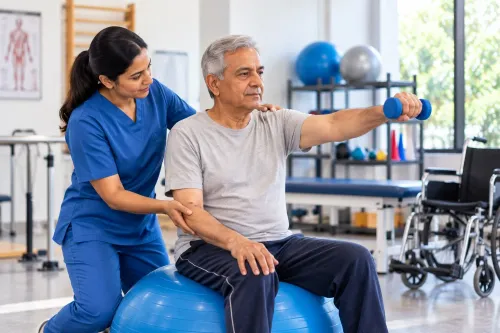
- Specific exercises for strength, such as quadriceps or hip work, plus range-of-motion practice and suitable walking, cycling or aquatic exercise.
- The number of repetitions, sessions per week and a clear progression, such as adding repetitions or resistance when movement feels controlled.
- A load rule: reduce repetitions, resistance or impact if pain remains significantly worse the next day, then rebuild gradually.
- Activity advice that keeps you moving safely, including how to manage stairs, squatting, prolonged sitting and walking rather than stopping all movement.
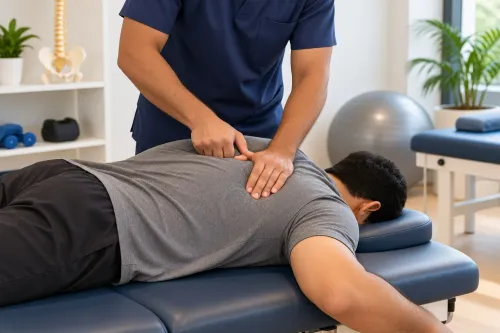
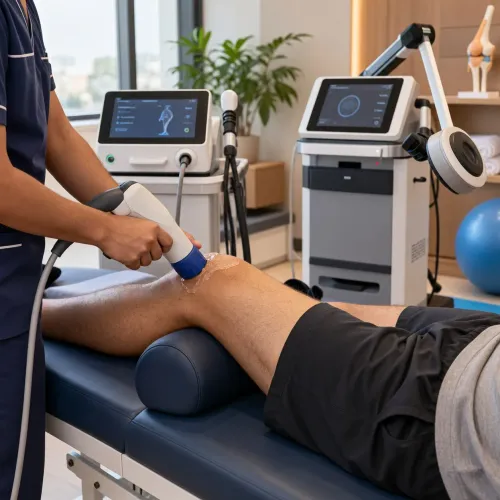
- An explanation of any hands-on treatment. Mobilisation or soft-tissue work can support movement, but it is not a complete knee rehabilitation Rohini programme without therapeutic exercise.
- A method for tracking pain, walking tolerance, knee function or exercise performance.
Ask when follow-up is due and what improvement should be visible by then. If findings suggest referred hip or spine pain, tendon injury, ligament damage or inflammatory arthritis, the clinician should arrange referral or co-management instead of continuing routine knee rehabilitation Rohini sessions. A fixed package or guaranteed cure is a warning sign.
How to Choose a Clinic and Decide Whether to Book
Before you book knee pain treatment, check that the clinic assesses you before selling a package. A sensible first visit produces a working diagnosis, an individual plan and a review date—not a guaranteed cure or a promise that one session will permanently remove pain.
Ask the knee pain clinic near me these questions:
- Will you examine movement, strength, walking and relevant hip or ankle problems before recommending treatment?
- Which exercises will I do at home, and how will I increase or reduce the load?
- How will you measure progress: walking time, stair use, pain, swelling, strength or knee movement?
- When will you review the plan, and what happens if symptoms worsen?
- If osteoarthritis is relevant, will you discuss activity and weight management without blaming weight for every symptom?
Manual therapy, massage or electrotherapy can support comfort, but they are weak as a complete rehabilitation plan. Exercise should usually include tailored strengthening and movement work, with aerobic or aquatic exercise when suitable. Temporary soreness can occur; the clinician should explain how to adjust rather than abandon activity.
| Proposal | Sensible sign | Warning sign |
|---|---|---|
| Assessment | History and physical examination precede treatment | Scan or package is recommended without examination |
| Treatment | Exercise, education and activity changes are included | Passive treatment is presented as the whole cure |
| Follow-up | Progress measures and a review date are clear | Fixed sessions continue without reassessment |
Back In Motion -Dr. Sajal Agarwal -Physiotherapist is worth comparing on these practical standards, not on promises or package size.
Frequently asked questions
What should I bring to my first knee pain appointment?
Bring previous X-ray or scan reports, surgery or hospital records, your medication list, referral notes, and a timeline of your symptoms.
What physical tests are used to find the source of knee pain?
The clinician may assess knee movement, strength, swelling, walking, balance, tenderness, and pain during specific movements.
When do I need imaging, referral, or urgent medical care for knee pain?
Imaging or referral depends on the examination and injury history. Seek urgent care for severe deformity, fever, sudden major swelling, or inability to bear weight.
What should I receive after my first knee physiotherapy appointment?
You should leave with a working assessment, immediate self-care advice, exercises or activity guidance, treatment goals, and a follow-up plan.
Keywords