Elbow pain is not limited to tennis players or golfers. It commonly affects people who use tools, lift weights, cook frequently, work on computers, play racquet sports, or repeatedly grip and carry objects.
Tennis elbow and golfer’s elbow treatment in Pitampura starts by identifying which tendons are involved and which activities are creating excessive strain. Although the conditions sound similar, the pain usually occurs on different sides of the elbow.
Tennis Elbow Affects the Outer Side
Tennis elbow, also known as lateral elbow tendinopathy, generally causes pain around the outside of the elbow. Symptoms may increase while gripping, lifting a bag, using a mouse, opening a jar, or performing backhand movements in racquet sports.
The tendons involved help extend the wrist and stabilise it during gripping tasks. Repeated loading beyond the tissue’s current capacity can contribute to irritation and reduced function.
Golfer’s Elbow Affects the Inner Side
Golfer’s elbow, or medial elbow tendinopathy, usually causes discomfort on the inner side of the elbow. It may be aggravated by gripping, wrist flexion, throwing, weight training, or repetitive manual work.
Some patients experience tenderness only during activity, while others develop persistent discomfort that affects everyday tasks.
Treatment Depends on More Than Pain Location
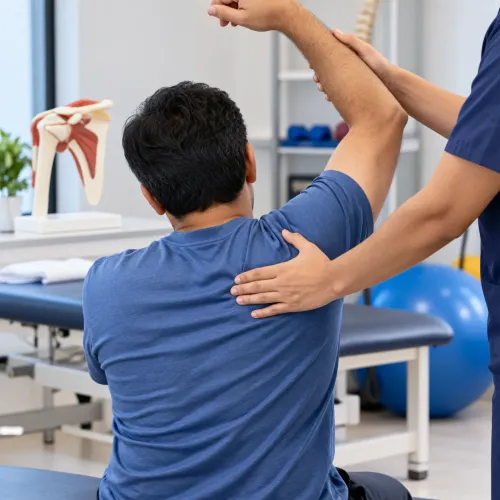
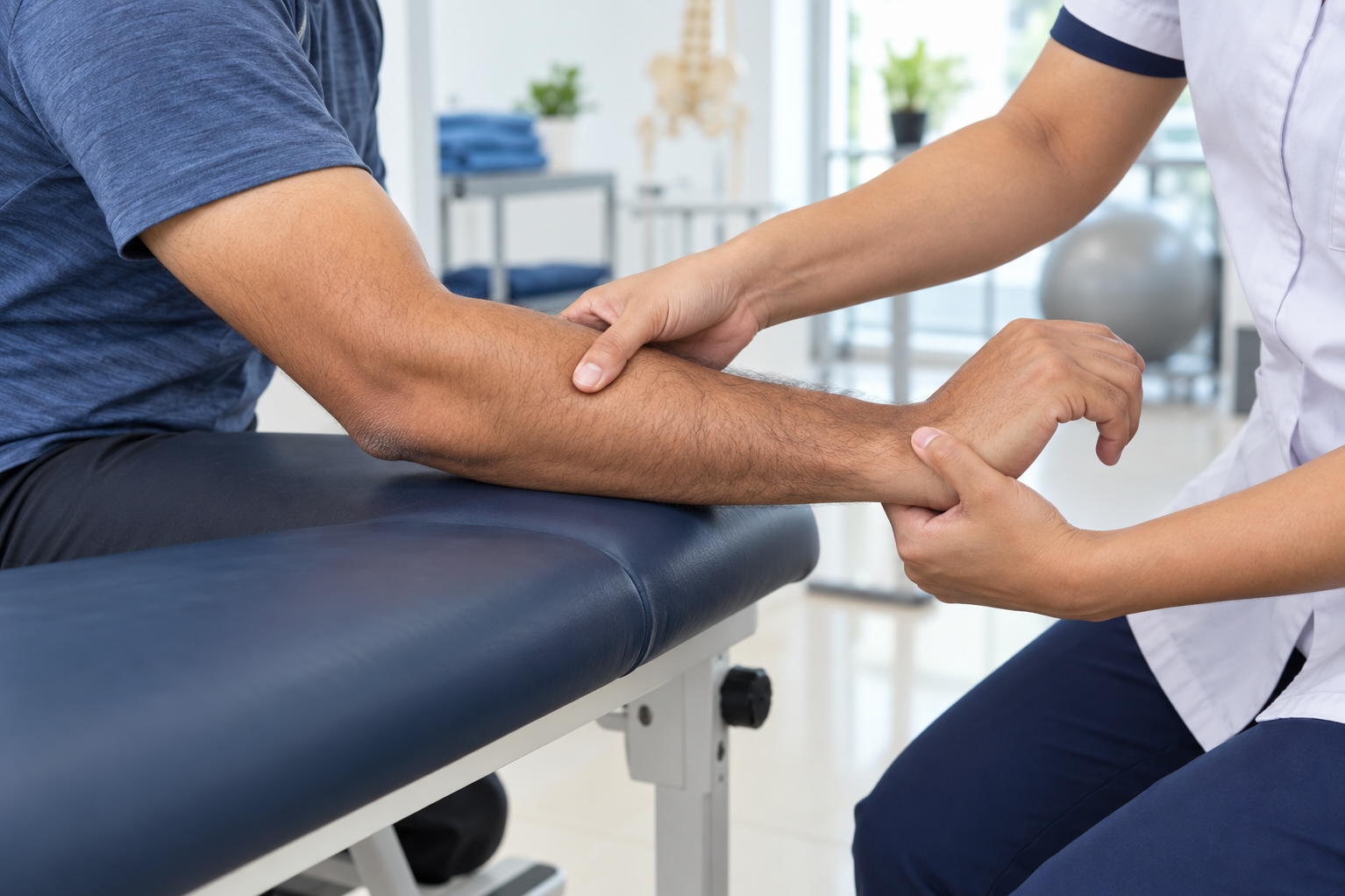
A physiotherapist should assess the elbow, wrist, shoulder, and relevant functional activities. Neck-related nerve irritation can occasionally produce symptoms around the elbow, so the source should not be assumed without examination.
Assessment may consider:
- Grip strength
- Pain during resisted movements
- Tendon tenderness
- Wrist and elbow mobility
- Shoulder strength
- Work or sports technique
- Recent changes in training or workload
Understanding the activity that triggered symptoms is essential for preventing recurrence.
Complete Rest May Not Restore Tendon Capacity
Avoiding every painful activity can reduce irritation temporarily, but tendons generally need controlled loading to regain strength. Rehabilitation commonly includes progressive resistance exercises selected according to symptom tolerance.
The initial programme may use gentle isometric exercises. Later stages can introduce controlled wrist strengthening, grip training, shoulder exercises, and movements related to the patient’s occupation or sport.
Load should be increased gradually. Large, sudden increases can provoke symptoms even when the exercises themselves are appropriate.
Where Advanced Modalities May Fit
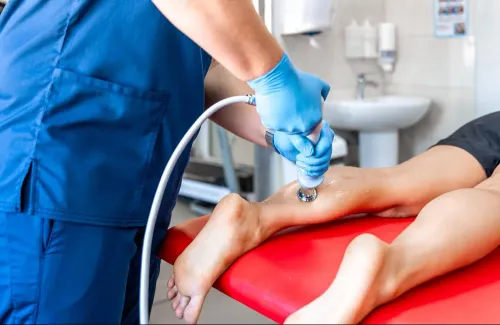
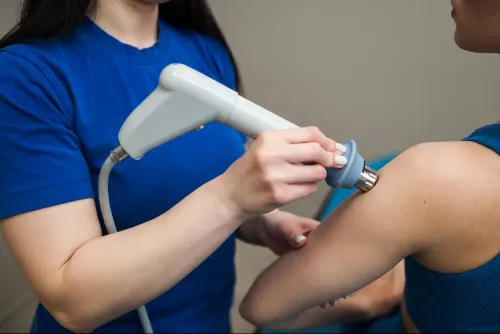
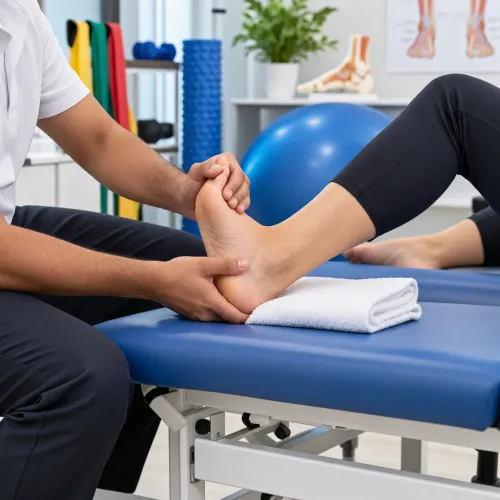
For persistent tendon pain, the physiotherapist may consider treatments such as extracorporeal shockwave therapy after assessing suitability. Manual techniques or other modalities may also be used to support symptom management.
These interventions should accompany a wider plan that addresses strength, workload, and movement habits. A machine cannot correct repeated overload if the provoking activity remains unchanged.
Practical Changes During Recovery
Patients may temporarily modify tasks without abandoning them completely. Helpful adjustments can include:
- Reducing heavy gripping
- Using both hands to lift
- Changing tool-handle size
- Reviewing racquet grip and technique
- Temporarily reducing training volume
- Taking breaks during repetitive work
- Avoiding sudden increases in gym loads
An elbow strap may help selected patients during certain activities, but it does not replace rehabilitation.
When to Seek Further Assessment
Medical evaluation may be needed after a fall, when the elbow is visibly swollen or deformed, or when symptoms include marked weakness, persistent numbness, fever, or locking.
Residents of Pitampura seeking elbow rehabilitation can consult nearby physiotherapy services in Rohini. Back In Motion provides assessment and treatment planning for tennis elbow, golfer’s elbow, and other musculoskeletal conditions.
Tennis elbow and golfer’s elbow treatment in Pitampura should focus on restoring the tendon’s ability to tolerate everyday demands. Accurate diagnosis, progressive strengthening, workload management, and correction of contributing movement patterns can produce a more complete recovery than short-term pain relief alone.
Keywords