
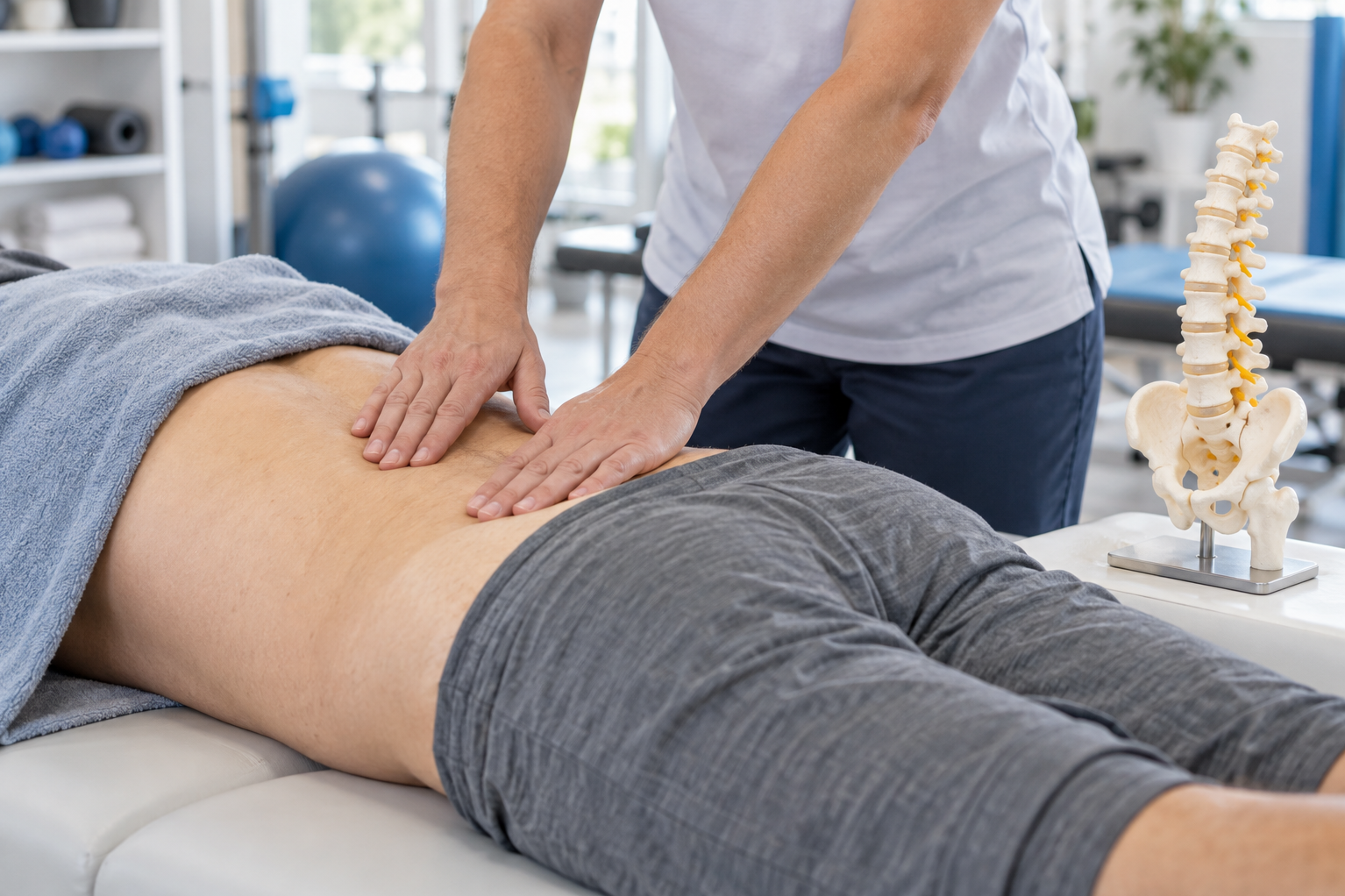
Lower-back pain can make sitting, standing, travelling, bending, and sleeping unexpectedly difficult. Some people experience pain only around the lumbar region, while others notice discomfort travelling into the buttock or leg.
Disc pain and lumbar pain physiotherapy in Rohini begins with identifying the symptom pattern. Not every episode of lower-back pain is caused by a damaged disc, and scan findings do not always explain the severity of a person’s symptoms.
Common Patterns of Lumbar Pain
Back pain may develop after lifting, prolonged sitting, unfamiliar exercise, repetitive bending, or a sudden awkward movement. In other cases, symptoms appear gradually without one clear incident.
Patients may report:
- Localised lower-back pain
- Stiffness after sitting or waking
- Pain while bending or straightening
- Discomfort during prolonged standing
- Pain spreading towards the leg
- Tingling or numbness
- Reduced confidence in movement
The location and behaviour of symptoms help guide the assessment.
Why Examination Matters
A physiotherapist may examine lumbar movement, hip mobility, lower-limb strength, posture, nerve sensitivity, walking, and the activities that reproduce symptoms. The assessment also helps determine whether referral to a physician or further investigation is advisable.
An MRI can identify disc changes, but imaging must be interpreted alongside symptoms and clinical findings. Some people have disc changes without significant pain, while severe discomfort may occur without major structural abnormalities.
What Physiotherapy May Include
Treatment is selected according to the patient’s presentation. A programme may include gentle mobility exercises, strengthening, movement retraining, manual techniques, postural guidance, and education about safely resuming activity.
The rehabilitation process may focus on:
- Reducing highly irritable symptoms
- Restoring comfortable movement
- Improving trunk and hip strength
- Increasing sitting, standing, and walking tolerance
- Preparing for work or exercise demands
- Reducing the likelihood of recurring episodes
Exercises are not identical for every form of back pain. A movement that helps one person may aggravate another, particularly during the early stage.
Prolonged Rest Is Rarely the Complete Answer
People with back pain often become afraid that movement will cause further damage. Short periods of relative rest may be appropriate when symptoms are intense, but prolonged inactivity can contribute to stiffness, weakness, and reduced tolerance.
The goal is usually to identify manageable activities and increase them gradually. This may begin with short walks, comfortable mobility exercises, or adjustments to sitting duration.
Office professionals in Rohini and other parts of Delhi may also need practical changes to their work routine. Alternating positions, taking movement breaks, adjusting screen height, and avoiding uninterrupted sitting can support the rehabilitation programme.
Warning Signs Require Prompt Medical Attention
Physiotherapy is not the correct first step in every situation. Urgent medical assessment is important when back pain is accompanied by:
- Loss of bladder or bowel control
- Numbness around the groin or saddle region
- Rapidly increasing leg weakness
- Major trauma
- Fever or unexplained illness
- Severe unremitting night pain
- Unexplained weight loss
These symptoms do not automatically indicate a serious condition, but they should not be ignored.
Building a Sustainable Recovery Plan
Back In Motion, Dr. Sajal Agarwal, Physiotherapist, evaluates musculoskeletal pain and provides individualised rehabilitation in Rohini, Delhi. The plan may combine symptom-management techniques with exercises intended to improve movement and functional capacity.
Disc pain and lumbar pain physiotherapy in Rohini should help patients understand their condition rather than become dependent on repeated passive treatment. A clear assessment, graded movement, suitable strengthening, and practical lifestyle guidance can provide a more sustainable route back to work, exercise, and everyday activity.
Keywords


